
In 2026, the Skål Europe Sustainability Awards reach their sixth edition.
Over the years, the Awards have provided Skål members with an opportunity to bring forward sustainability initiatives developed throughout the tourism sector, making practical experiences visible and allowing ideas to be shared across our international professional network.
The purpose remains simple: to recognise meaningful work, discover valuable experiences and help good ideas travel.
We invite Skål members across Europe to present the sustainability initiatives in which they are involved, whether developed individually, within their businesses or organisations, together with colleagues and partners, or as part of wider projects.
Projects can be large or small, established or experimental, sophisticated or remarkably simple.
What matters is the sustainability challenge being addressed, what has actually been done, what difference it has made and what others may be able to learn from the experience.
Sustainability in Tourism
Tourism depends on places, people, resources, cultures and functioning economies.
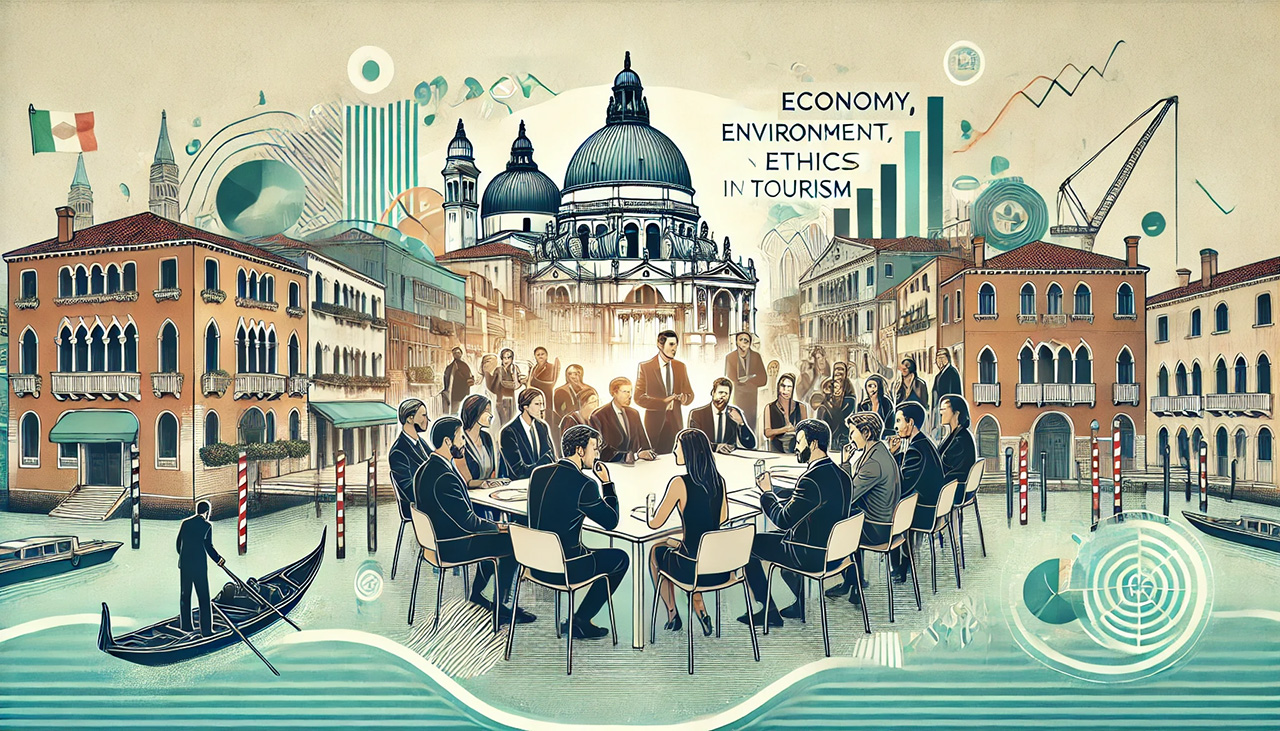
For this reason, the Skål Europe Sustainability Awards consider sustainability through three interconnected dimensions:
Environment
Initiatives that reduce environmental impact, protect or restore natural resources, improve the management of energy, water or waste, contribute to biodiversity and ecosystems, address emissions or develop other practical responses to environmental challenges.
Society
Initiatives contributing to communities, employees, accessibility, inclusion, wellbeing, cultural heritage, local identity and constructive relationships between tourism, visitors and the people who live in destinations.
Economy
Initiatives supporting long-term economic viability, resilient tourism businesses, quality employment, local supply chains, responsible development and the capacity of tourism to generate lasting value for destinations and their communities.
These dimensions should not be understood as separate boxes.
Sustainability challenges rarely belong exclusively to one of them, and many initiatives create environmental, social and economic value simultaneously.
Projects are therefore welcome whether they concentrate primarily on one dimension or address several dimensions together.
A project does not receive greater consideration simply because it covers more dimensions.
An initiative addressing one specific sustainability challenge exceptionally well may be just as significant as a project working across all three.
From Sustainability to Regeneration
During 2026, Skål Europe has devoted particular attention to Regenerative Tourism and to an emerging question for our industry: can tourism go beyond reducing its negative impacts and actively contribute to improving the places and communities in which it operates?
Regenerative approaches are welcome among submissions to the Sustainability Awards.
They are not a requirement.
Regenerative tourism is still developing as a field of practice, and the Sustainability Awards remain deliberately open to the full diversity of credible sustainability initiatives.
Reducing energy consumption matters. Preventing waste matters. Improving employment practices matters. Protecting heritage matters. Strengthening a local supply chain matters. Restoring an ecosystem matters.
Sustainability is often built through practical improvements, one decision at a time.
What We Are Looking For
The Sustainability Awards are not a competition to identify the largest project, the biggest investment or the organisation with the greatest resources.
Nor does an initiative need to introduce something completely new to be valuable.
An established solution, intelligently adapted and effectively implemented in a particular context, may produce greater sustainability value than an innovative idea that remains theoretical.
Projects will therefore be considered in relation to their objectives, circumstances, scale and available resources.
Before evaluating a project, the Board will consider whether it represents a genuine sustainability initiative appropriate to the purpose of the Awards.
Eligible projects will then be evaluated according to four common criteria.
1. Quality of Approach
How well does the initiative respond to the sustainability challenge and its particular context?
We are interested in understanding the problem or opportunity that was identified and why the chosen response was appropriate.
A strong approach may involve innovation, but innovation is not required.
It may instead demonstrate intelligent adaptation of an existing practice, effective collaboration, careful use of available resources or a particularly appropriate response to local circumstances.
The important question is not simply whether the approach is new, but whether it makes sense.
2. Implementation
What has actually been done?
Sustainability begins with intentions, but it produces value through action.
We therefore want to understand how the idea was translated into practice, what actions were taken, who was involved and how the initiative was implemented.
Projects still under development may be considered where sufficient practical work has already taken place to allow the Board to understand the approach and evaluate the experience.
The Awards are not intended to recognise plans or aspirations alone.
3. Impact
What difference has the initiative made?
Impact may be environmental, social, economic or a combination of these.
We are interested in actual results and in the evidence that reasonably supports them.
Evidence should be appropriate to the nature and scale of the initiative and proportionate to the claims being made.
A large corporate programme may have extensive measurements and reporting systems. A small tourism business may demonstrate its results through operational information, observed changes, participation, comparisons, documented examples or other appropriate evidence.
We do not expect every participant to produce a formal sustainability report.
We do expect sustainability claims to be credible and supported.
Impact may also include lasting benefits: changes in practices, skills, relationships, infrastructure, environmental conditions or knowledge that remain valuable beyond the immediate activity.
4. Learning Value
What can others learn from this experience?
One of the purposes of the Skål Europe Sustainability Awards is to allow useful experience to circulate.
An initiative does not need to be directly replicable elsewhere to have learning value.
A project may demonstrate an approach that others can adapt, reveal an unexpected solution, show how a difficulty was overcome, provide evidence about what works or offer an important lesson about what did not work as expected.
Sometimes understanding why a solution succeeded in one particular context is itself valuable knowledge.
We therefore encourage participants to tell us not only what they achieved, but also what they learned along the way.
Innovation Is Welcome, but It Is Not the Objective
Innovation has an important role in sustainable tourism.
New technologies, partnerships, business models and ways of working can create opportunities that did not previously exist.
But novelty alone does not make an initiative sustainable, and established solutions do not become less valuable simply because somebody has used them before.
The Skål Europe Sustainability Awards recognise effective sustainability.
The question is not only:
“Is this new?”
It is:
“Does this work, and what can we learn from it?”
Projects of Every Scale
Skål members work in very different professional environments.
A multinational tourism organisation, a destination, an independent hotel, a tour operator, an attraction, a guide, a restaurant and a small family business have very different resources and opportunities.
Their achievements cannot reasonably be compared through absolute numbers alone.
The Board will therefore consider results in relation to the context, objectives, scale and resources of each initiative.
Large-scale impact matters, but size is not in itself a measure of quality.
A small initiative solving a real sustainability problem intelligently and effectively can be as relevant to the Awards as a major programme operating at considerable scale.
We particularly encourage members of smaller organisations to bring their experiences forward.
Evaluation and Recognition
Submissions will be evaluated by the Skål Europe Board, acting as the Jury of the Skål Europe Awards 2026.
The three sustainability dimensions help the Board understand where an initiative creates sustainability value:
Environment · Society · Economy
The four evaluation criteria help the Board assess the quality of the initiative:
Quality of Approach · Implementation · Impact · Learning Value
Projects are not required to perform equally across the environmental, social and economic dimensions, nor will covering a greater number of dimensions automatically result in a higher evaluation.
The nature and context of each initiative will always be taken into consideration.
Where appropriate, the Board may also grant additional recognition for a particularly significant characteristic or achievement emerging from the submissions received.
The Sustainability Awards will be presented during the Skål Europe Annual General Assembly in November 2026. The date and location will be announced separately.
Sharing What We Learn
Receiving a Sustainability Award is an important recognition, but it is not the only purpose of participating.
Every serious sustainability initiative contains experience.
Sometimes the most interesting element is the project as a whole. Sometimes it is one practical solution, an effective partnership, an unexpected result, a difficulty that was overcome or a lesson learned when something did not work as originally expected.
These experiences deserve to circulate.
Skål Europe will seek opportunities to present participating initiatives through articles, interviews and other editorial content on skaleurope.org.
Where an experience can contribute to wider professional learning, participants may also be invited to share their work through the Skål Europe Academy.
By sharing what works, what we have learned and what others might adapt, individual experiences can contribute to better tourism practices elsewhere.
How to Participate
The Sustainability Awards are open to projects and initiatives brought forward by Skål members and endorsed by a Skål Club.
Clubs may also submit projects developed by prospective members, in accordance with the general participation guidelines of the Skål Europe Awards 2026.
Full information concerning eligibility, language, submission materials, photographs and media, intellectual property and publication conditions is available in:
Skål Europe Awards 2026 – How to Participate
The deadline for submissions is:
31 October 2026
Bring Us Your Experience
Sustainability does not happen only through major programmes.
It also happens when someone identifies a problem, decides that something can be improved and turns that decision into action.
If you have developed something that works, improved an existing practice, tested a new approach or learned something that could be valuable to other tourism professionals, we would like to discover it.